
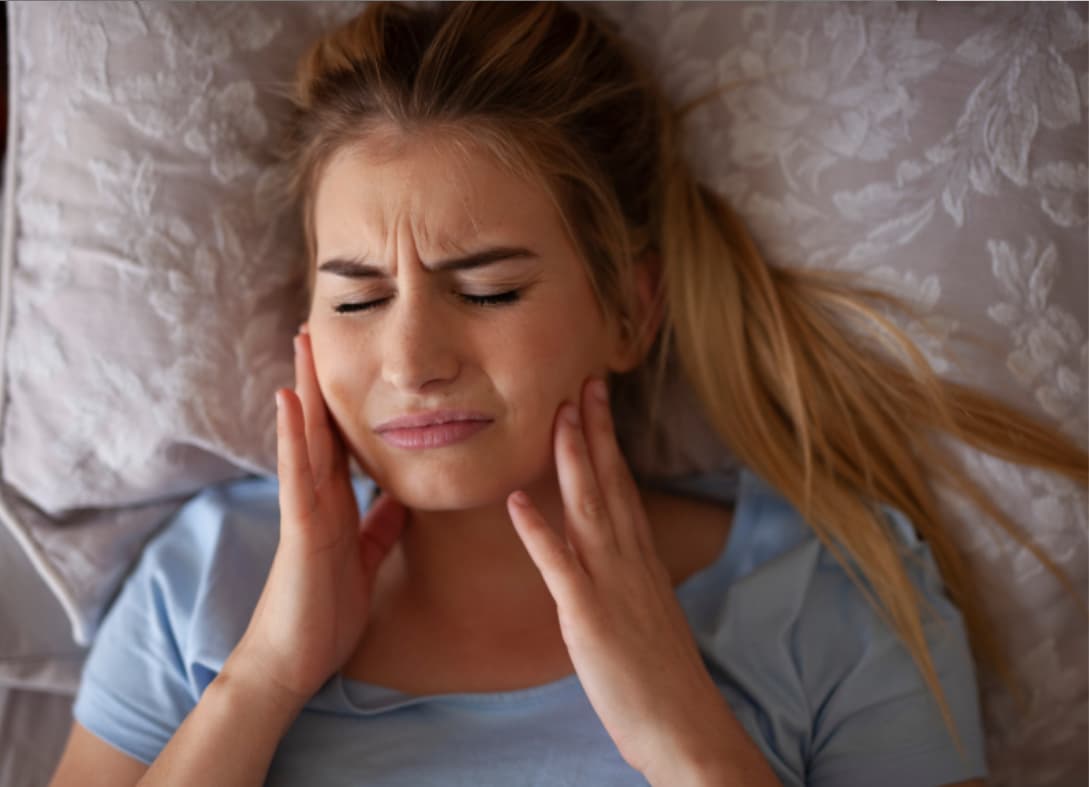
How to Stop Grinding Your Teeth?
By Dr. Diana Sensenbrenner, DDS
Short Answer
You can stop grinding your teeth by protecting your teeth first, then identifying what’s triggering the clenching or grinding. For many people, that means wearing a custom nightguard and addressing contributing factors like stress, bite imbalance, airway issues, or muscle tension. If you’re waking up with jaw tightness, headaches, or tooth sensitivity, a dental exam can confirm whether grinding is the cause and what to do next.
Ridgetop Dental serves patients across Alexandria, Reston, and Sterling, Virginia.
Table of Contents
What Teeth Grinding Is Doing to Your Mouth
Why People Grind Their Teeth at Night
How Do I Know If I Am Grinding My Teeth?
How We Help You Stop Grinding at Ridgetop Dental
Quick Guide: What Helps Most with Teeth Grinding
What to Expect at Your Grinding Evaluation
What Happens If You Ignore Grinding?
What Teeth Grinding Is Doing to Your Mouth
Teeth grinding (bruxism) often happens while you sleep, so it’s easy to miss until the signs start piling up. Over time, the constant pressure can wear enamel down, stress your jaw muscles and joints, and make teeth more prone to chips, cracks, and sensitivity.
Patients often tell me they wake up tired even after a full night of rest. Once we treat the grinding, their sleep quality improves dramatically.
“They showed me how issues with my breathing were causing clenching and grinding. No one had ever explained that before.”
— Zachary Henry
Why People Grind Their Teeth at Night
Most people do not grind for just one reason. It is usually a combination of physical, emotional, and sleep-related triggers. (Grinding can also occur during the day without you realizing it!)
Grinding usually isn’t caused by just one thing. Common contributors include:
- Stress and tension that you hold in your jaw
- Bite misalignment (your teeth don’t meet evenly)
- Sleep apnea or airway issues (jaw shifts to open the airway)
- Medications or lifestyle factors like caffeine, nicotine, or alcohol
- TMJ dysfunction or joint inflammation
How Do I Know If I Am Grinding My Teeth?
Many people don’t realize they’re grinding until the symptoms show up in the morning. You might be grinding if you notice:
- Morning jaw tightness or soreness
- Headaches or temple pressure
- Sensitivity in multiple teeth, especially with cold or temperature changes
- Flattened, shortened, or chipped enamel
- Small cracks or “craze lines”
- Clicking or popping in your jaw joint
- Broken fillings or crowns without an obvious reason
- A partner hears clenching or grinding at night
Schedule a visit with me so we can discuss the best treatment for you.
Alt text:Man placing a custom nightguard onto his teeth, demonstrating how nightguards help protect against grinding.
How We Help You Stop Grinding at Ridgetop Dental
Stopping grinding is not one-size-fits-all. The plan depends on what we find during your exam. Here’s the approach we typically take:
1) Protect your teeth with a custom nightguard
A custom nightguard is often the first line of defense. It’s made to fit your teeth closely and absorb the force of grinding, which helps protect enamel and keep your bite stable. Store-bought guards can feel bulky or uncomfortable, and many people stop wearing them for that reason.
2) Treat the root cause so it doesn’t keep coming back
We look at factors like jaw alignment, uneven bite contact, airway issues, muscle tension, and stress-related habits. When there’s a clear trigger, addressing it directly can reduce clenching over time instead of just “masking” it.
3) Reduce muscle tension and nighttime clenching habits
Some patients benefit from simple changes like jaw stretching, warm compresses before bed, avoiding chewing gum, and limiting caffeine later in the day.
4) Restore worn or damaged teeth when needed
If grinding has already caused chips, cracks, or sensitivity, restoring a tooth can help prevent future fractures. Treatment might include bonding, an onlay, or a crown depending on the damage.
5) Screen for sleep apnea or airway-related contributors
When clenching is connected to an airway issue, improving breathing can reduce grinding and improve sleep quality.
Quick Guide: What Helps Most with Teeth Grinding
| What’s contributing to grinding? | What can help | Why it matters |
| Stress and tension | Nightguard + calming bedtime routine | Protects teeth while jaw muscles settle |
| Uneven bite contact | Bite evaluation + targeted dental plan | Reduces the “searching” your jaw does at night |
| Muscle tightness | Stretching, warm compresses, habit changes | Lowers clenching intensity over time |
| Worn or cracked teeth | Restorations (bonding, onlay, crown) | Prevents small damage from becoming fractures |
| Airway issues / sleep apnea | Screening and coordinated care | Better breathing can reduce grinding triggers |
| Lifestyle factors | Adjust caffeine, nicotine, alcohol timing | Can reduce nighttime muscle activity |
What to Expect at Your Grinding Evaluation
- We’ll ask about symptoms (jaw soreness, headaches, tooth sensitivity, sleep quality).
- We’ll examine your teeth for wear, cracks, and bite contact patterns.
- If a nightguard makes sense, we’ll plan a comfortable custom fit (so you’re more likely to wear it consistently).
- We’ll review likely contributors, like stress, bite imbalance, or airway concerns, and discuss next steps.
- If needed, we’ll talk through tooth repair options to protect vulnerable teeth.
What Happens If You Ignore Grinding?
Grinding can feel like “just tension,” but the damage adds up quietly. Untreated grinding can lead to headaches and facial tension, cracked or fractured teeth, broken dental work, gum recession, TMJ problems, severe enamel loss, and bite changes over time.
Don’t put your health and sanity on hold. Let’s schedule your consultation today.
“Dr. Datta and the team at Ridgetop Dental are amazing. They always take their time to explain everything and make sure I am comfortable. I never feel rushed, and every visit has been a positive one.”
— Ridgetop Dental Patient
FAQs About Teeth Grinding
Why do I grind my teeth at night?
Common reasons include stress, bite imbalance, airway issues (including sleep apnea), and muscle tension. A dental exam can help identify which factors are most likely in your case.
Can grinding cause jaw or TMJ pain?
Yes. Grinding overloads the jaw joint and muscles and can lead to pain, clicking, or tightness, especially in the morning.
Do nightguards stop grinding?
Nightguards protect your teeth and can reduce muscle activity for some people, but long-term relief usually comes from addressing the underlying trigger too.
Are custom nightguards better than store-bought?
Custom guards are made to fit your teeth closely, which usually makes them more comfortable and easier to wear consistently. Store-bought guards can feel bulky or poorly fitted for many patients.
Are nightguards worth it?
If you’re wearing down enamel, waking up sore, or breaking dental work, a nightguard can be a practical way to protect your teeth while you work on the cause.
Will teeth grinding go away on its own?
Sometimes it improves if a temporary trigger resolves, but many people need support to protect their teeth and reduce clenching habits long-term.
Can kids grind their teeth too?
Yes. Kids can grind during growth phases, stress, or airway issues. It’s worth evaluating if you notice symptoms or tooth wear.
Protect Your Teeth Before Grinding Causes Bigger Problems
You do not have to wake up with soreness, headaches, or sensitivity anymore. Grinding is treatable, preventable, and often improves quickly with the right care.
If you think you may be grinding your teeth, let’s take a closer look together. We will identify the cause, protect your enamel and help your jaw finally relax.
Schedule a visit with Ridgetop Dental and give your smile the comfort it deserves.